
Lecture and Demonstration on “Chado - Way of Tea” at the Royal University of Bhutan (March 27, 2026)
2026/4/7
On March 27, the Embassy of Japan in Bhutan invited Mr. Shimura Soko, Deputy Tea Master, the Urasenke Foundation (Konnichian) of Japan, to hold a lecture and demonstration on “Chado - Way of Tea” at the Royal University of Bhutan (RUB). This event was held to commemorate the 40th anniversary of the establishment of diplomatic relations between Japan and Bhutan this year. Approximately 150 people attended the event, including the chief guest, Ms. Nagtsho Dorji, Director General, Department of Culture and Dzongkha Development, Ministry of Home Affairs, as well as RUB officials, professors, students, and Japanese language learners.
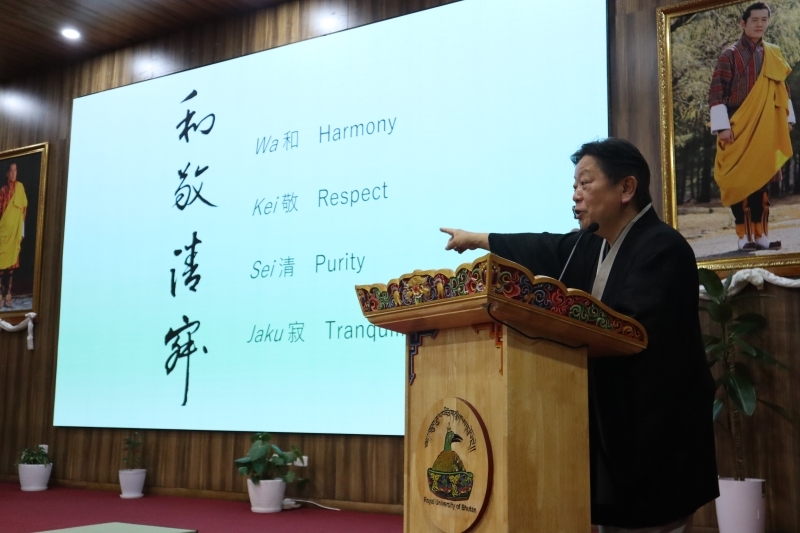
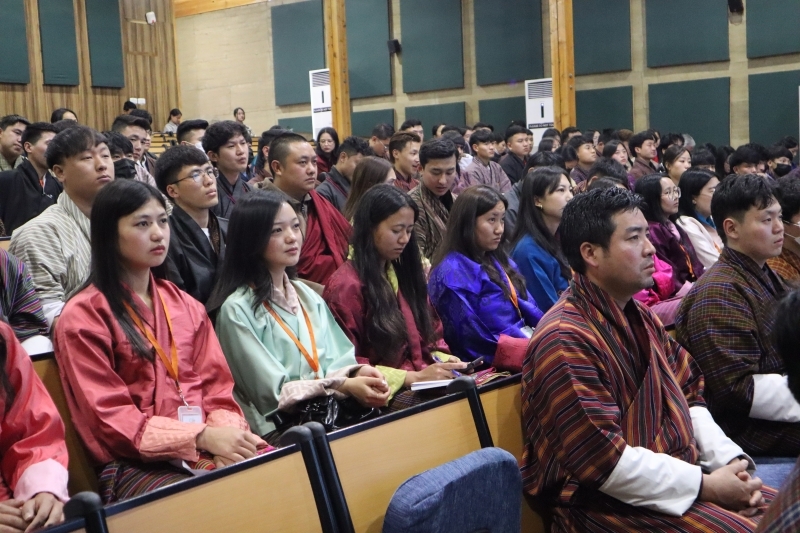
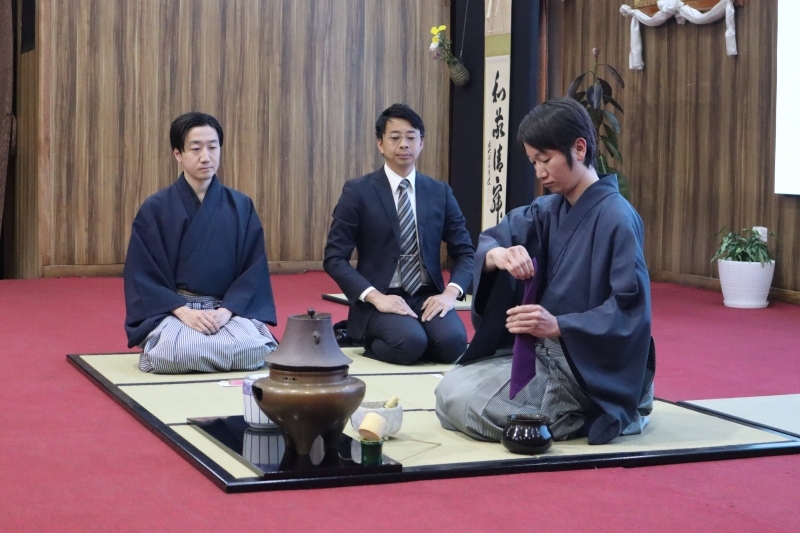
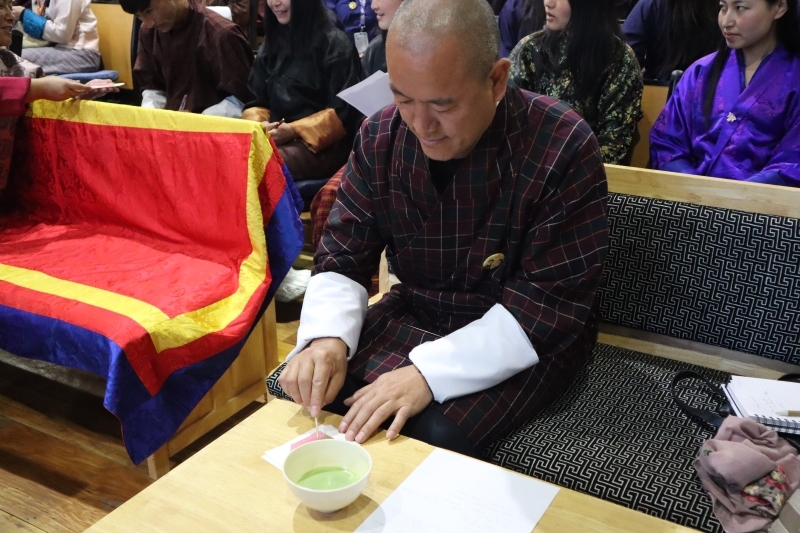
At the event, Mr. Shimura first gave a lecture on the history of the Way of Tea, followed by a presentation using PPT slides to introduce the layouts of Japanese tearooms and the various utensils. This was followed by a tea gathering demonstration on stage, during which Deputy Tea Master Shimura explained the meaning of and background behind each movement. The participants listened intently to the lecture while taking notes, and during the demonstration, many stood up from their seats to follow each movement being performed right before their eyes - a rare experience for most. After the event concluded, some participants were served traditional Japanese sweets and thin tea prepared on the spot, allowing them to savor “authentic” tea - an experience rarely available in Bhutan.
It was a valuable event that helped the people of Bhutan deepen their understanding of Japanese culture through the Way of Tea.
At the event, Mr. Shimura first gave a lecture on the history of the Way of Tea, followed by a presentation using PPT slides to introduce the layouts of Japanese tearooms and the various utensils. This was followed by a tea gathering demonstration on stage, during which Deputy Tea Master Shimura explained the meaning of and background behind each movement. The participants listened intently to the lecture while taking notes, and during the demonstration, many stood up from their seats to follow each movement being performed right before their eyes - a rare experience for most. After the event concluded, some participants were served traditional Japanese sweets and thin tea prepared on the spot, allowing them to savor “authentic” tea - an experience rarely available in Bhutan.
It was a valuable event that helped the people of Bhutan deepen their understanding of Japanese culture through the Way of Tea.